Nubian Gold Relics
For millennia, the geographic expanse south of the First Cataract of the Nile was renowned across the ancient Near East simply as Ta-Seti (the Land of the Bow) or Nub, an Egyptian root closely tied to the noun for gold. The Kingdom of Kush, centering on monumental hubs such as Kerma, Napata, and later Meroë, exercised absolute sovereign control over the rich quartz-vein goldfields situated between the Nile and the Red Sea hills.
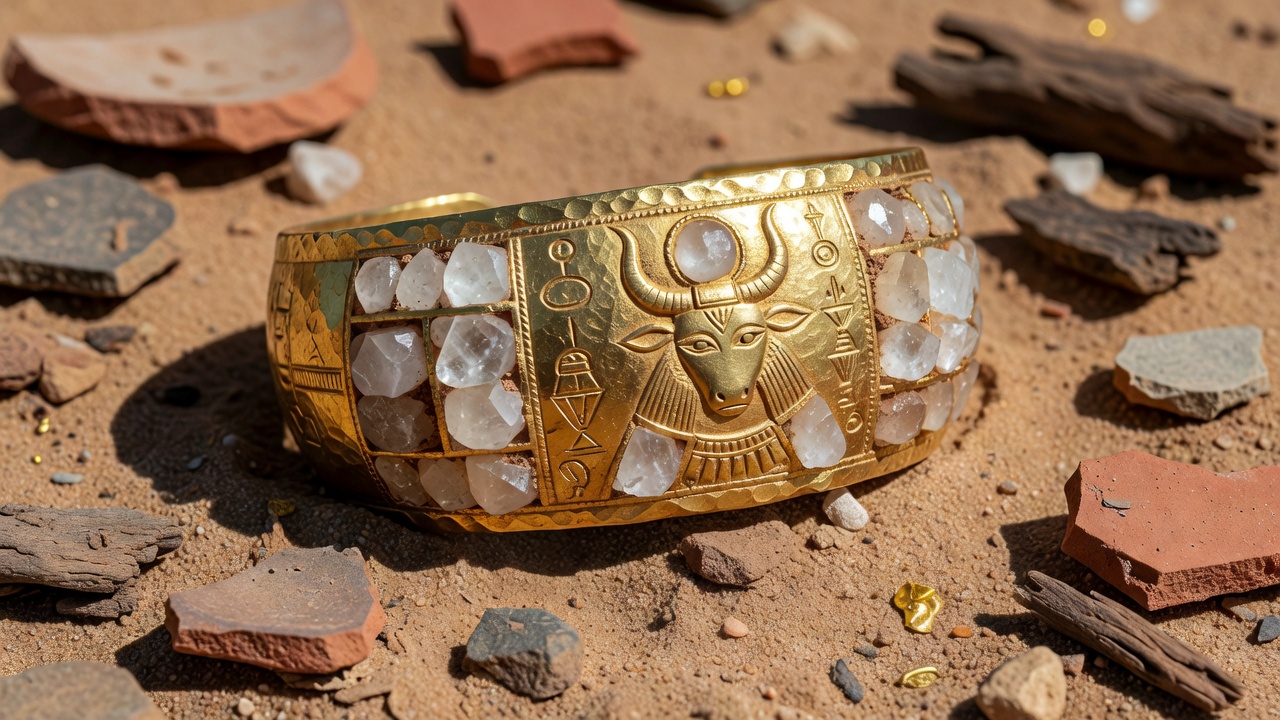
The Chemistry of Kushite Smelting
Excavations conducted across modern northern Sudan reveal that Nubian artisans were far more than passive extractors of alluvial placer nuggets. Archaeological strata at Kerma (c. 2500–1500 BCE) reveal heavy stone grinding mills and ceramic crucible fragments that bore slag coats indicative of forced-air draft smelting. By blending native gold with controlled silver and copper ratios, Kushite metallurgists manufactured electrum alloys with lowered melting temperatures and heightened tensile strength.
These alloys permitted intricate filigree and granulation techniques. Unlike contemporary Egyptian artifacts that frequently favored thin gilded leaf overlaying wooden cores, Kushite royal adornments were cast solid using the lost-wax (cire perdue) process, exhibiting heavy, distinct structural dimensions.
The Royal Necropolises of Nuri and El-Kurru
During the Twenty-Fifth Dynasty (the Nubian Pharaohs who united Kush and Egypt), royal tombs erected at El-Kurru and Nuri received burials of unprecedented luxury. King Piye, Shabaka, and Taharqa commanded the production of hundreds of carved steatite and gold-inlaid funerary statuettes (shabtis). The treasure of Queen Amanishakheto, excavated in the nineteenth century from her pyramid at Meroë, yielded over sixty rings, chased armlets, and talismanic pendants featuring lapis, glass paste, and high-purity gold.
| Excavation Site | Predominant Ore Type | Dominant Goldsmithing Technique | Reference Specimen |
|---|---|---|---|
| Kerma Deffufa | Quartz vein auriferous | Open-hearth crucible smelting | Kerma Gold Disk Pectoral |
| El-Kurru Necropolis | Placer alluvial nuggets | Repoussé chasing and cold hammering | Piye Royal Falcon Pendant |
| Meroë Pyramid 6 | Refined electrum alloys | Granulation and cloisonné glass inlay | Amanishakheto Signet Rings |
Trade Routes and Continental Exchange
Kush did not hoard its metallurgical output in isolation. The wealth of Nubia fueled international diplomacy. Caravans traversing the Wadi Allaqi and the Wadi Gabgaba transported ingots to the Mediterranean, while southern routes distributed finished armaments and ornaments deep into the African interior. The permanence of these artifacts stands as testament to a sophisticated civilization whose material legacy outlasted the dynastic squabbles of the ancient Mediterranean basin.